Reading the Room Before You Draw the Course
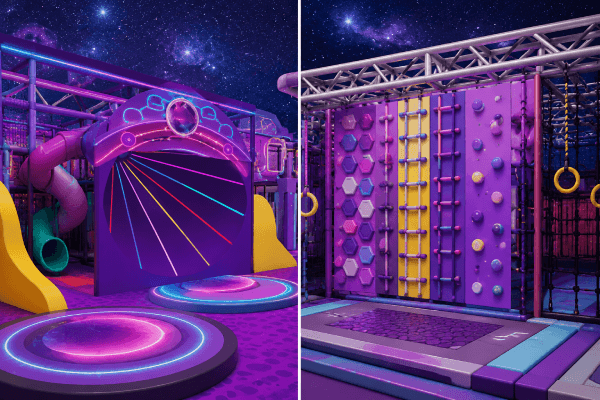
Indoor ninja attractions succeed or fail on the drawing board long before a single obstacle is bolted down. Operators who treat the course as a design problem rather than a shopping list end up with venues that photograph well, run smoothly at peak hours, and stay interesting after the tenth visit. A well-resolved indoor ninja warrior course design begins with three honest answers: how much clear height the building offers, how wide the main aisle must stay for emergency egress, and which age bands the venue actually wants to serve. Write those constraints down before reviewing catalogues, because every later decision – lane count, obstacle spacing, sightlines, and staffing – is derived from them. Getting them wrong is expensive; getting them right makes everything downstream simpler.
Lane Geometry, Flow, and Throughput
Throughput is where most facilities lose money. A course that looks generous on paper can still bottleneck if guests queue inside the play zone, if two lanes converge on one landing mat, or if a single staff member has to supervise three blind corners at once. A custom ninja warrior facility package should specify the number of simultaneous runners the venue intends to handle, then work backwards to lane geometry, start and finish gates, and the width of the spectator rail. Planning parallel lanes with independent timing solves more problems than any single clever obstacle. It also gives staff a clean way to separate casual visitors from league nights without closing the attraction.
Obstacle Progression and Difficulty Tiers
Difficulty tiers keep a course relevant to a mixed audience. Younger guests need low elements they can clear with a stretch, while teenagers want at least one station that genuinely humbles them. Layering the route – an easy outer loop, a harder inner line, and an optional bonus element for confident runners – means a family can share the same attraction without anyone being bored or stranded. Pairing the course with a companion ropes and climbing attraction extends the same booking across two activities and gives repeat visitors a reason to buy a longer pass. When the two attractions share a viewing area, parents stay comfortable and staff can supervise both zones from a single station.
Engineering, Safety, and Compliance
Structure, fixings, and fall protection deserve the same scrutiny as the fun factor. Working with an experienced Miland indoor playground manufacturer means the engineering drawings, load calculations, and material specifications arrive together rather than being negotiated after delivery. Confirm the fall height of each element against the shock-absorbing surface, check that every bracket and cable is rated for commercial duty, and insist on a maintenance schedule that staff can actually follow. Documented inspections also satisfy insurers and reassure parents. Correctly engineered equipment rarely costs more over its lifetime; it simply moves the cost from repairs to planning.
What the Ninja Sports Boom Teaches Operators
Television coverage of obstacle course racing has done the marketing work for operators. Audiences already understand the format, recognise the obstacles, and arrive expecting timers, leaderboards, and a clean course. Venues that lean into this – running weekly ladders, school-holiday challenges, and friendly inter-business tournaments – convert a one-off visit into a habit. The competitive layer costs very little to operate but changes how guests behave: they return to improve a personal best, they bring friends to compare results, and they post their times without being asked. That organic reach is worth more than most paid campaigns.
Budgeting, Staffing, and Revenue Planning
Before signing anything, model the numbers. Price the build, installation, staffing, and annual maintenance, then test how many paid sessions per day are needed to break even. Ninja courses tend to carry healthy margins because they need less floor area and less equipment than a full trampoline hall, and because they appeal to adults as well as children. Train staff to score runs consistently and to enforce safety rules politely, and the attraction will sell itself. Start with a clear brief, a realistic budget, and a partner who has built commercial courses before. Categories: Indoor Playground, Ninja Course, Obstacle Course, Family Entertainment Center, Commercial Playground Equipment, FEC Attractions. Tags: ninja course design, indoor ninja warrior, obstacle course, family entertainment center, commercial playground, fec attractions. https://www.milandplay.com/product/ninja-course/
Leave a Reply